How Running Transforms Your Body and Mind
From extending your lifespan to rewiring your brain chemistry, the science reveals benefits far more profound than you might expect.
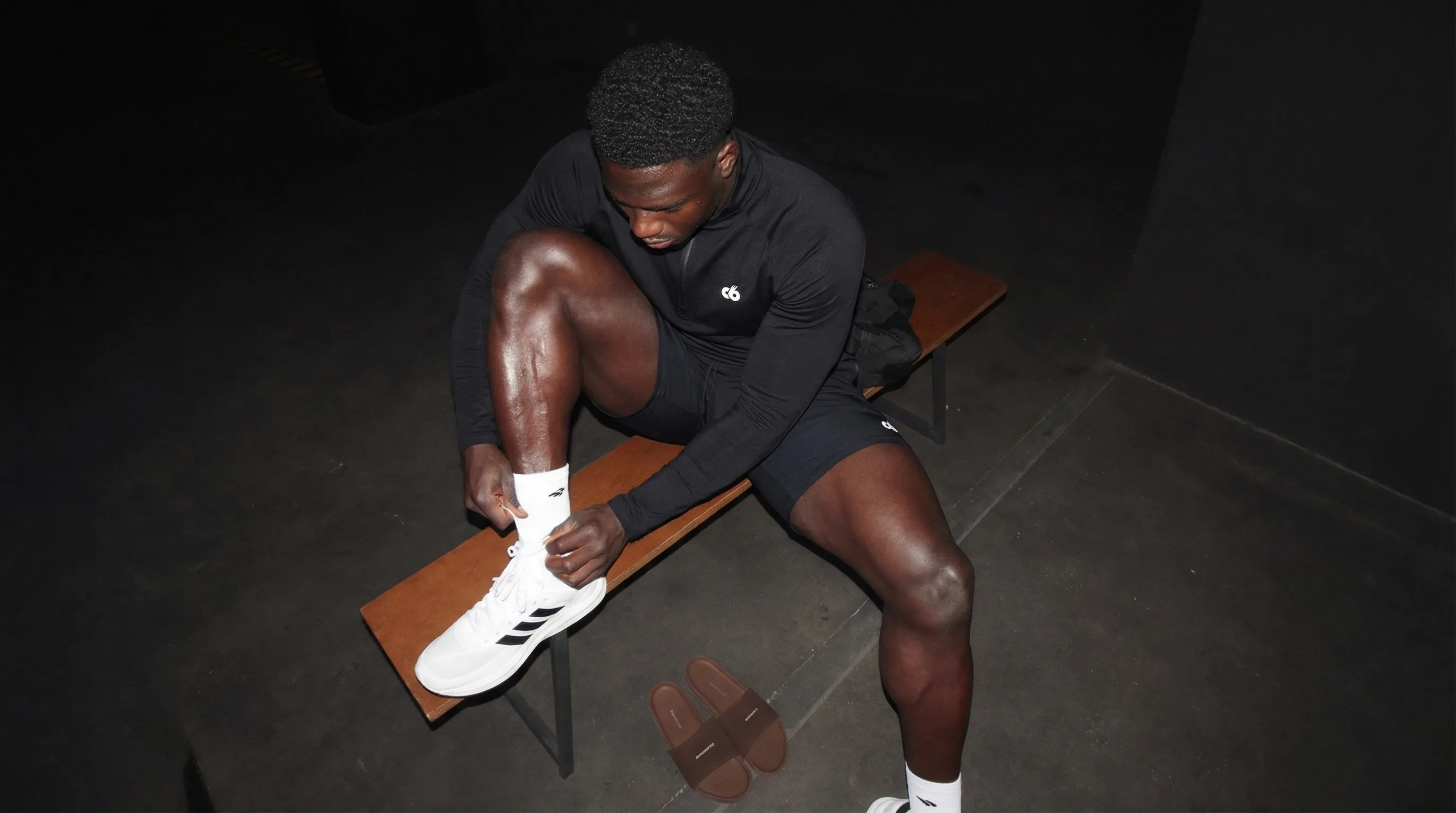

The fundamental principles most people overlook—and how to stop leaving gains on the table.
Whether you're squeezing workouts into a busy schedule or spending hours at the gym, the goal is the same: get results. The problem? Most people leave gains on the table by overlooking a few fundamental principles. This guide breaks down what the science actually says about training effectively.
If time is limited—and for most of us, it is—compound exercises should form the backbone of your training. These multi-joint movements work several muscle groups simultaneously, meaning you accomplish more in less time.
A squat, for example, engages your quadriceps, hamstrings, glutes, calves and core all in one movement. Compare that to a leg extension, which only targets your quads. Research published in Frontiers in Physiology found that multi-joint exercises were more efficient for improving both strength and cardiovascular fitness compared to single-joint isolation work.
Squats, deadlifts, bench press, rows, overhead press, pull-ups, and lunges. Master these movements and you've covered nearly every major muscle group in your body.
Compound exercises also teach your muscles to work together as a coordinated unit, improving balance and functional strength that carries over into daily life. Picking up groceries, climbing stairs, playing with your kids—these all require multiple muscle groups working in harmony.
Here's the uncomfortable truth: if you're doing the same workout with the same weights week after week, your muscles have no reason to grow. They've already adapted to the challenge. This is where progressive overload comes in—gradually increasing the demand on your muscles over time.
"The human body will not change unless it is forced to. Through progressive overload, you build upon your strength in a systematic and logical way, forcing yourself out of your comfort zone to see measured results."
A 2024 study published in the International Journal of Sports Medicine confirmed that progressive overload—whether achieved by increasing weight or adding repetitions—effectively promotes gains in both strength and muscle size. The key is gradual, consistent progression.
You don't need to add weight every single session. Progressive overload can happen in several ways: increasing the weight lifted, adding more repetitions, adding extra sets, shortening rest periods, or slowing down your lifting tempo. The general guideline is to keep increases within 10% per week to allow for adaptation while minimising injury risk.
Keep a training log. It's impossible to progressively overload if you can't remember what you lifted last week. A notebook or fitness app makes this simple and keeps you accountable.
Here's a truth that fitness content rarely acknowledges: most people's problem isn't overtraining—it's not training enough. The real barrier to results isn't recovery; it's consistency. If you wake up on a scheduled rest day feeling fresh and motivated, go train.
The fitness industry loves talking about recovery, deload weeks, and the dangers of doing too much. And yes, recovery matters. But for the average person who trains a few times a week, the risk of overtraining is vanishingly small. The far greater risk is letting momentum slip, skipping sessions, and never building exercise into your identity.
Results come from what you do repeatedly, not occasionally. The goal isn't to have a perfect programme—it's to make showing up feel automatic. When training becomes your default behaviour, you stop relying on motivation and start relying on momentum.
Think about the people you know who are genuinely fit. They don't agonise over whether to train today. They just go. Exercise isn't something they fit into their life—it's part of how they live. That mindset shift matters more than any periodisation scheme.
"The best programme is the one you actually follow. Consistency beats optimisation every single time."
This doesn't mean ignoring genuine fatigue or pushing through injury. If you're legitimately exhausted, rest. If something hurts, back off. But if it's a rest day and you feel good? That's not a reason to stay home—that's a green light. Listen to your body, but be honest about what it's telling you. There's a difference between needing recovery and simply not feeling like it.
The people who see long-term results aren't the ones with the most sophisticated training splits. They're the ones who kept showing up, year after year, through busy periods and holidays and setbacks. Build that foundation first. Worry about optimising recovery once training is so ingrained that skipping feels wrong.
Quality sleep might be the most underrated factor in fitness results. It drives the hormonal shifts that promote recovery from exercise. Without adequate sleep, symptoms of overtraining set in quickly, including fitness plateaus, mood changes, and increased injury risk.
Research consistently shows that poor sleep impairs exercise performance, reduces calorie burn during workouts, and limits your body's ability to recover and adapt. The ideal target is seven to nine hours of quality sleep per night—every night, not just after hard training days.
"A large portion of muscle regeneration and cellular repair happens while we're sleeping. If you're not sleeping enough, you're leaving gains on the table."
Performance gear engineered for those who never really stop.
Shop Now →Losing just 2% of your body weight in fluids can make workouts feel harder, reduce exercise performance, and impair your body's ability to recover afterwards. Yet studies have found that a significant majority of gym-goers arrive at their workouts already dehydrated.
The recommendation is to drink roughly half your body weight in ounces of water throughout the day (for example, an 80kg person would aim for about 2.5 litres). Don't wait until you're thirsty—by then, you're already behind. And drinking water right before exercise won't help; it takes a couple of hours for your body to properly absorb fluids.
Your body needs carbohydrates for fuel and protein for muscle repair. Neglecting either will limit your results regardless of how hard you train.
Eating carbohydrates before a workout provides the fuel your body needs for high-intensity activity. When properly fuelled, you'll work harder and get better results in terms of calorie burn and muscle stimulus. For post-workout recovery, protein is essential. Research shows that a protein-rich meal or shake after training stimulates muscle protein synthesis—the process that rebuilds and strengthens muscle tissue.
While the "anabolic window" isn't as narrow as once believed, getting protein within a few hours of training does support muscle recovery. Foods rich in casein (like Greek yoghurt or cottage cheese) are particularly useful before bed, as this slow-digesting protein keeps amino acid levels elevated overnight.
Your body adapts to whatever stress you place on it. Do the same routine indefinitely and you'll plateau. Changing your workout programme every six to eight weeks introduces new stimulus, creating fresh adaptation signals for your muscles.
But there's a balance to strike. You need to stick with a programme long enough to actually progress on it. Jumping between routines every week means you never develop proficiency in any movement. The sweet spot is maintaining the same core exercises for several weeks while progressively increasing the challenge, then introducing variation before the plateau sets in.
Longer workouts aren't necessarily better workouts. After about 40 minutes of high-intensity training, the benefits start to diminish. Your hormone response becomes less favourable and fatigue accumulates.
The solution isn't to spend more time in the gym—it's to spend that time more effectively. Focus on compound movements, proper form, adequate intensity, and minimal time wasted between sets. A focused 30-minute session often outperforms a meandering hour-long one.
Proper technique ensures all your muscles are correctly engaged and protects your joints from injury. It also makes each rep more effective. If you're unsure about your form, invest in a few sessions with a qualified trainer or use video to check yourself.
Building a stronger, fitter body isn't complicated, but it does require consistency and attention to the fundamentals. Prioritise compound movements that work multiple muscle groups. Apply progressive overload so your muscles are constantly challenged. Make training your default—show up even when you don't feel like it. Sleep enough, eat enough protein, and stay hydrated. These principles aren't glamorous. There's no secret exercise or magic supplement that replaces them. But apply them consistently over months and years, and the results will speak for themselves.